Málaga has undergone a massive transformation over the last two decades, evolving from a simple gateway to the Costa del Sol into one of Europe’s most vibrant cultural hubs. Whether you are a newly arrived resident looking for the best ways to stay updated on Málaga news or a visitor looking to scratch beneath the surface, navigating the local cultural scene requires a mix of practical knowledge and appreciation for local rhythm.
Here is a practical, no-nonsense guide to experiencing the best of Málaga’s culture, from world-class art galleries to the unwritten rules of daily life.
The Big Three Museums
Málaga is home to over 30 museums, but if you are short on time, these three offer the most distinct experiences.
1. Museo Picasso Málaga
Born in Málaga in 1881, Pablo Picasso remains the city’s most famous son. Housed in the beautifully restored Buenavista Palace, this museum offers an intimate look at his life’s work. Rather than just his most famous masterpieces, you will find a deeply personal collection donated by his family, showcasing his evolution as an artist.
* Local Tip: Entry is free during the last two hours on Sunday afternoons. Be prepared to queue, or book your ticket online in advance.
2. Centre Pompidou Málaga
You cannot miss the giant, multicolored glass cube sitting at the corner of Muelle Uno. As the first international branch of the famous Parisian art center, it hosts exceptional temporary exhibitions alongside a permanent collection of 20th and 21st-century art. It is modern, thought-provoking, and highly visual.
3. Museo Carmen Thyssen
Located in the heart of the historic center, this museum focuses on 19th-century Spanish painting, particularly Andalusian art. It is the perfect place to understand the romanticized, colorful vision of traditional Spain, featuring landscapes, festivals, and flamenco-inspired portraits.
Ancient History on Foot
You do not need to buy a museum ticket to experience Málaga’s history. Walk through the center, and you will step through centuries of civilization within a few blocks. If you want to explore beyond the main monuments, there are many hidden trails and local spots worth discovering on foot.
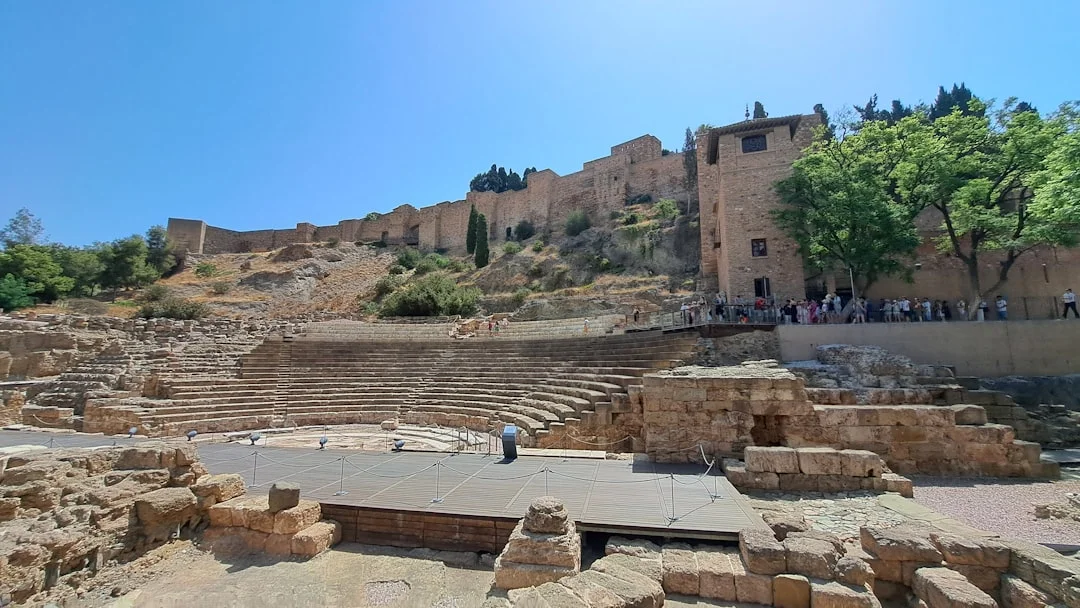
- The Roman Theatre: Dating back to the 1st century BC, it sat hidden under a modern building until it was rediscovered in 1951. Today, it serves as a stunning open-air monument at the foot of the fortress.
- The Alcazaba: This 11th-century Moorish palace-fortress is one of the best-preserved in Spain. Walk up its stone pathways lined with orange trees, jasmine, and trickling fountains for a quiet escape from the city noise.
- Gibralfaro Castle: Connected to the Alcazaba by a steep walled corridor, this castle offers the classic postcard view of Málaga’s bullring and port. It is a steep climb, so head up early in the morning or late in the afternoon to avoid the heat.
Understanding Local Customs
To truly experience Málaga, you must understand how the locals (Malagueños) live. Culture here is not just hanging on a gallery wall; it is lived in the streets and plazas.
The Art of Ordering Coffee
If you order a simple café con leche in Málaga, you might get a puzzled look. In the mid-20th century, the owner of the historic Café Central invented a unique system to avoid wasting coffee. Locals still use these exact measurements today:
* Un solo: Pure black coffee.
* Un largo: Extra strong (mostly coffee, a splash of milk).
* Un mitad: Half coffee, half milk.
* Un sombra: More milk than coffee.
* Un nube: A “cloud” of coffee (mostly hot milk with a tiny splash of coffee).
The Evening Paseo
Life in southern Spain slows down in the afternoon and wakes up again in the evening. Between 8:00 PM and 10:00 PM, locals participate in the paseo—a leisurely stroll down Calle Larios or along the beachfront promenade. It is a time for families and friends to catch up, look at shop windows, and decide where to grab a bite to eat.
Chiringuito Etiquette
Eating espetos (sardines skewered on bamboo sticks and roasted over open olive-wood fires in old fishing boats) is a culinary ritual. For the best experience, head to the beaches of El Palo or Pedregalejo. Order them with a cold caña (draft beer) or tinto de verano (red wine with lemon soda). This culinary tradition is a highlight of any seasonal itinerary, especially when pairing it with other stylish Málaga summer plans featuring local gastronomy and culture. Traditionally, locals say the best months to eat sardines are those without an “r” in their Spanish names (May, June, July, August).
Making the Most of the City
As Málaga continues to grow and welcome new faces from all over the world, preserving these small, daily traditions is what keeps the city’s soul alive. Take your time, walk slowly, and do not be afraid to practice your Spanish at the neighborhood market. The beauty of this city lies in its balance of cosmopolitan energy and deep-rooted Andalusian warmth.
Leave a Reply