Category: Eat & Drink

Restaurants, cafes, bars and food experiences

  • Gastro-Design: The New Era of Dining in Málaga’s Center

    Gastro-Design: The New Era of Dining in Málaga’s Center

    For a long time, eating in Málaga was a straightforward affair. You went for the espetos on the sand or the ensaladilla rusa in a noisy, tiled tavern. The food was honest, and the atmosphere was chaotic but charming. However, if you have walked through the city center recently, you have likely noticed a shift. The gastronomic boom that has been building over the last few years has entered a new phase: the era of Gastro-Design.

    It is no longer enough to serve excellent food. In the competitive landscape of 2025, the environment must be as curated as the wine list. We are seeing a wave of openings where interior design is not just decoration, but a fundamental ingredient of the menu.

    The Psychology of Space

    Why does the lighting over your table matter as much as the salt in your dish? According to design experts like those at Lago Interioriza, the union of gastronomy and interior design is essential for creating a complete sensory experience. The texture of the napkin, the acoustics of the room, and the color palette all prime your brain for how you perceive flavor.

    In Málaga, this trend is moving away from the industrial, unfinished look of the 2010s toward something warmer, more sophisticated, and distinctly Mediterranean. It is about creating spaces that invite you to stay, relax, and most importantly, share.

    Matiz: A New Standard for Sharing

    One of the most notable recent additions to the center is Restaurante Matiz. Located right in the heart of the city, Matiz encapsulates this new philosophy perfectly. It isn’t just a place to eat; it is a space designed for social interaction.

    The culinary concept focuses heavily on sharing—a tradition deeply rooted in Andalusian culture but elevated here with a modern twist. As reported by The Gourmet Journal, the restaurant offers a multisensory experience where the seasonal produce takes center stage, but the setting plays a crucial supporting role. The interior combines elegance with comfort, using lighting and layout to encourage conversation rather than isolation.

    When you sit down at Matiz, the architecture of the plate and the architecture of the room speak the same language. It is a prime example of how the city’s hospitality sector is maturing.

    Willie Orellana: The Cathedral’s “Must”

    While new openings grab headlines, the consolidation of this trend is best seen in established chefs who understand the assignment. Willie Orellana’s spot, Uvedoble Taberna, located just a stone’s throw from the Cathedral, remains a benchmark.

    Orellana successfully bridged the gap between the traditional tavern and the modern gastro-bar years ago, but it remains incredibly relevant today. It is frequently cited as a “must-visit,” with publications like Condé Nast Traveler highlighting it among the best stops in the city and province. The space is compact and sleek, forcing a level of intimacy that makes the dining experience feel exclusive yet bustling.

    Here, the design serves the function of the “tapa”: quick, high-quality, and social. It proves that good design doesn’t always mean massive dining halls; it means making the best use of the unique, often irregular spaces found in Málaga’s historic center.

    The Social Table

    What ties Matiz, Uvedoble, and other newcomers together is the concept of the “social table.” The post-2024 diner in Málaga isn’t looking for a stiff, white-tablecloth soliloquy. They want to pass plates across the table.

    Restaurateurs are responding by knocking down partitions and choosing furniture that facilitates eye contact. The menus are being written with “para compartir” (to share) as the default heading, not an afterthought. This requires interiors that can handle the noise of laughter and the clatter of cutlery without becoming deafening—a difficult balance that the best local designers are finally mastering.

    Looking Ahead

    As we watch these beautiful new spaces pop up around Calle Larios and the Cathedral, it is easy to get swept up in the glamour of velvet chairs and designer lamps. But at the end of the day, what matters most is that these places remain gathering spots for friends and families. We hope that amidst the aesthetic revolution, the laughter remains as loud and genuine as it always has been in Málaga, proving that while the walls may change, the soul of the city remains the same.

  • Gastro-Design: When Interiors Matter as Much as the Menu in Malaga

    Gastro-Design: When Interiors Matter as Much as the Menu in Malaga

    For decades, eating out in Malaga was a straightforward affair. You went where the fish was freshest or the ensaladilla rusa was the coldest. The decor? Often an afterthought—fluorescent lights, tiled walls, and paper tablecloths. And honestly, there is an undeniable charm to those traditional spots that we hope never disappears.

    However, if you have taken a walk through the city center recently, specifically around the Cathedral area, you might have noticed a shift. The gastronomic scene in Malaga is maturing, and quite rapidly. We are entering the era of “Gastro-Design,” where the architecture, lighting, and furniture are treated with the same reverence as the ingredients in the kitchen.

    It is no longer enough to just serve good food. To stand out in a booming city, new openings are betting on a holistic experience. Here is a look at how design is reshaping our local restaurants.

    The Rise of the ‘Total Experience’

    We eat with our eyes first. This old adage used to refer to the plating of the food, but today, it starts the moment you step through the door. The concept of gastro-design isn’t just about spending a fortune on fancy chairs; it is about narrative. It connects the culinary concept with the physical space.

    In Malaga, this trend is driven by a demanding local clientele and a sophisticated international audience. We are seeing spaces that are Instagrammable, yes, but also functional and comfortable. The acoustics are better, the lighting is warmer, and the flow of the room encourages conversation.

    Matiz: A Case Study in Cohesion

    One of the clearest examples of this new wave is Matiz. If you haven’t visited yet, it captures exactly where Malaga is heading.

    The restaurant focuses on a concept of sharing and tasting—a very Andalusian way of eating, but elevated. The interior design reflects this. It isn’t stiff or overly formal; it creates distinct “moments” within the same space. Whether you are sitting at the bar or in the courtyard area, the environment feels curated to match the menu.

    The textures used in the decor mirror the textures on the plate. It feels modern but rooted in the Mediterranean. This is crucial because a disconnect between food and design is the quickest way to confuse a diner. At Matiz, the harmony between the kitchen and the dining room suggests that the owners understand that comfort is the ultimate luxury.

    The Cathedral Zone: The New Design Hub

    Walk a few streets over, and you see the influence of restaurateurs like Willie Orellana. The area surrounding the Cathedral is transforming from a tourist-heavy transit zone into a destination for serious dining.

    Orellana’s projects are pushing the envelope. We are moving away from the “generic tourist trap” aesthetic toward venues that have personality and soul. These new spaces often feature:

    • Adaptive Reuse: Utilizing the historic bones of Malaga’s old buildings—exposed brick, original beams—and blending them with modern steel and glass.
    • Lighting as Architecture: Gone are the harsh overhead lights. We are seeing intimate, low-level lighting that creates privacy even in a crowded room.
    • Open Kitchens: The kitchen is now a stage. Design involves transparency, allowing diners to see the action, which builds trust and adds energy to the room.

    Why Design Matters for the Diner

    Why should you, the diner, care about the wallpaper or the choice of wood?

    1. Comfort: Good design considers ergonomics. You can linger over a second bottle of wine because the chairs are actually supportive.
    2. Acoustics: This is the invisible part of design. The new wave of restaurants is investing in sound-absorbing materials so you don’t have to shout to be heard by the person across the table.
    3. Pacing: The layout of a restaurant dictates the service flow. A well-designed floor plan usually results in better, more attentive service.

    Looking Toward 2026

    As we look ahead, the bar has been raised. For any new restaurant planning to open in the center of Malaga in the coming years, “good food” is merely the baseline entry requirement. To survive and thrive, they will need to tell a story through their space.

    We are likely to see more collaborations between top chefs and renowned interior architects. The competition is fierce, but the winner is ultimately the city itself. We are shedding the skin of a purely seasonal beach destination and putting on the suit of a European cultural and gastronomic capital.

    It is an exciting time to live and eat in Malaga. While we will always love our noisy, chaotic chiringuitos, there is something deeply satisfying about sitting in a beautiful room, with perfect lighting, enjoying a meal that tastes as good as the space feels.

    Let’s hope this attention to detail continues to spread, making our city not just a place to visit, but a place to truly savor.

  • Eating in Malaga: A Practical Guide for Locals and Visitors

    Eating in Malaga: A Practical Guide for Locals and Visitors

    Let’s be honest: eating in Malaga is a joy, but it can be confusing if you don’t know the local rules. The city has undergone a massive gastronomic explosion in the last decade, shifting from simple taverns to Michelin stars. However, the soul of Malaga remains in its traditional dishes and the specific rituals of how we eat.

    Whether you are a visitor trying to avoid the tourist traps or a local looking to rediscover the classics, this guide cuts through the noise. Here is what you need to know to eat well in the capital of the Costa del Sol.

    First Things First: The Coffee Code

    If you sit down at a terrace and order “a coffee with milk,” you might get a confused look from the waiter. In Malaga, ordering coffee is an exact science, created by the legendary Café Central (now closed, but the legacy lives on) to measure the ratio of coffee to milk.

    Here is your cheat sheet:

    • Nube: A lot of milk, just a splash of coffee.
    • Sombra: A bit more coffee than a nube, but still milky.
    • Mitad: Half coffee, half milk. The standard.
    • Cortado: Mostly coffee, a splash of milk.
    • Solo: Black coffee.

    Don’t overthink it, just pick your strength. And yes, it is perfectly acceptable to shout your order politely if the bar is noisy. It’s part of the charm.

    The Breakfast Ritual: The Pitufo

    Forget croissants or pancakes. The breakfast of champions here is the Pitufo (Smurf). It refers to the small size of the bread roll, which mimics the size of a Smurf.

    You order a pitufo toasted with:
    * Aceite y tomate: Olive oil and crushed tomato. A classic.
    * Catalana: The above, plus cured ham.
    * Zurrapa or Manteca: If you want something heavier, try these pork lard spreads. They are colored red (with paprika) or white. It sounds heavy, but it is delicious in the winter.

    Lunch: The Holy Trinity

    Lunch in Malaga usually starts late, around 2:00 PM or 2:30 PM. If you go at noon, you will be eating alone.

    1. The Espeto

    This is the icon. Sardines skewered on a bamboo stick and roasted over an open fire (usually in an old fishing boat filled with sand).

    The rules:
    * Eat them with your hands.
    * The best place to eat them is by the sea, specifically in the neighborhoods of El Palo or Pedregalejo. The further east you go along the promenade, the cheaper and more authentic they tend to get.
    * Tradition says to eat them in months that contain the letter “R” (though in reality, the summer months are when they are most popular and fat).

    2. Fritura Malagueña

    Fried fish is everywhere, but good fried fish is an art. It should be crisp, not greasy, and the flour should be light.

    Look for Boquerones (anchovies), either fried or in vinegar. Also, Rosada (Kingklip) is a local favorite white fish that is mild and perfect for children.

    3. Ensalada Malagueña

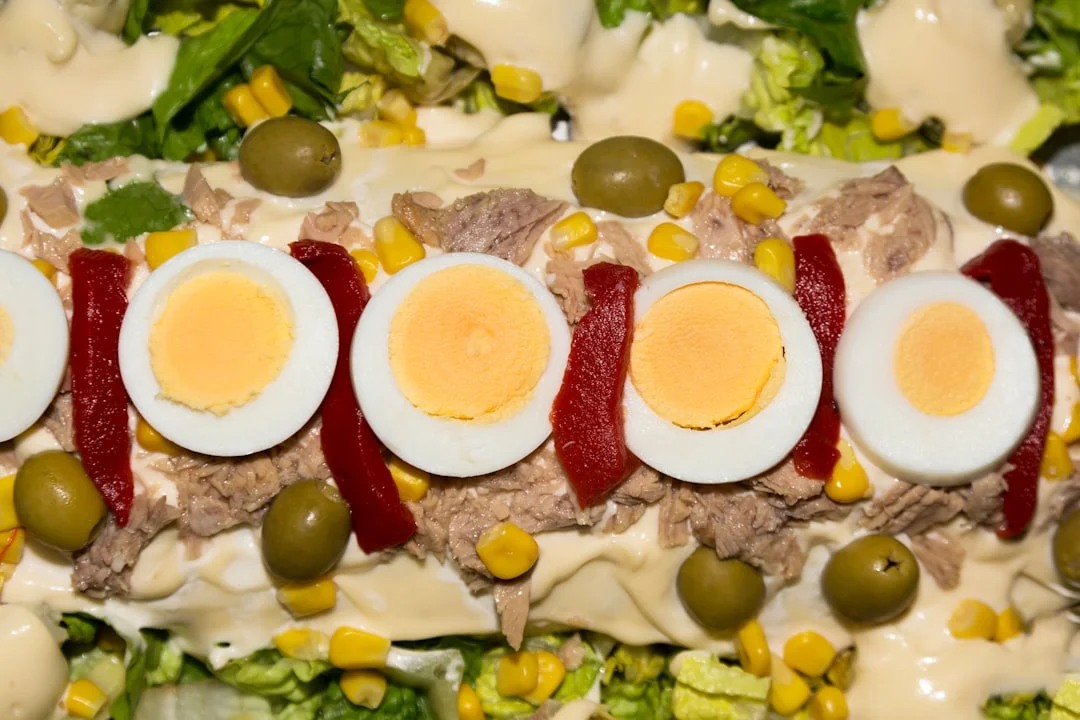
    Because you cannot live on fried food alone. This salad is a refreshing mix of cooked potatoes, oranges, cod (or tuna), scallions, and Aloreña olives. The contrast between the salty cod and the sweet orange is what makes this dish spectacular.

    The Spoon Dish: Gazpachuelo

    If you visit in winter or just want comfort food, ask for Gazpachuelo. It is a warm soup that looks like hot milk, but it is actually a fish stock emulsion made with garlic mayonnaise (alioli), potato, and white fish.

    It sounds strange to foreigners—warm mayonnaise soup?—but it is incredibly delicate and savory. It was originally a fisherman’s dish made from cheap ingredients, and now it is a delicacy.

    A Note on Tapas

    Unlike Granada, where tapas are often free and massive with every drink, Malaga operates differently. While you might get some olives or lupin beans (altramuces) with your beer, you usually pay for tapas here. This is actually good news: it means the quality is higher, and you can choose exactly what you want.

    The Sweet Finish

    If you have space left, walk into a bakery and ask for a Torta Loca (Crazy Cake). It consists of two rounds of puff pastry filled with custard, topped with an orange glaze and a cherry. It’s sweet, sticky, and undeniably Malagueño.

    Where to Shop: Atarazanas Market

    To understand the food, you have to see the raw ingredients. The Mercado Central de Atarazanas is essential. The building itself is a marvel, featuring a Moorish archway from the old shipyard.

    Inside, it’s loud and vibrant. You can buy fresh produce, but you can also stand at the bars inside the market and eat fresh prawns or skewers right off the grill. It is one of the best “fast food” experiences in the city.

    Final Practical Tips

    • Tipping: It is not mandatory, but leaving small change or rounding up is polite and appreciated.
    • Bread: In restaurants, bread is often placed on the table automatically and charged for (cubierto). If you don’t want it, say so immediately, though it is usually worth the euro to soak up the sauces.
    • Water: Tap water in Malaga is safe to drink, though many locals prefer bottled water due to the high mineral content (hard water) which affects the taste.

    Malaga’s food scene is about fresh ingredients and simple preparation. We don’t hide the flavors behind heavy sauces. We hope this guide helps you navigate the menus with confidence. There is always a new tavern to discover or an old favorite to revisit, so get out there and enjoy.