Sometimes the greatest treasures are found by accident. In the case of Málaga’s most famous geological monument, it wasn’t a team of archaeologists or geologists who broke ground, but a group of five local boys out looking for bats.
This year marks the 67th anniversary of that fateful night on January 12, 1959. While the official date passed earlier this year, the story remains a charming reminder of how much history lies just beneath our feet in the Axarquía region.
A Night to Remember
Sixty-seven years ago, five young friends from Maro—Francisco Navas, brothers Miguel and Manuel Muñoz, José Luis Barbero, and José Torres—headed towards a sinkhole known locally as “La Mina.” They had noticed bats exiting the hole and, driven by curiosity, decided to investigate.
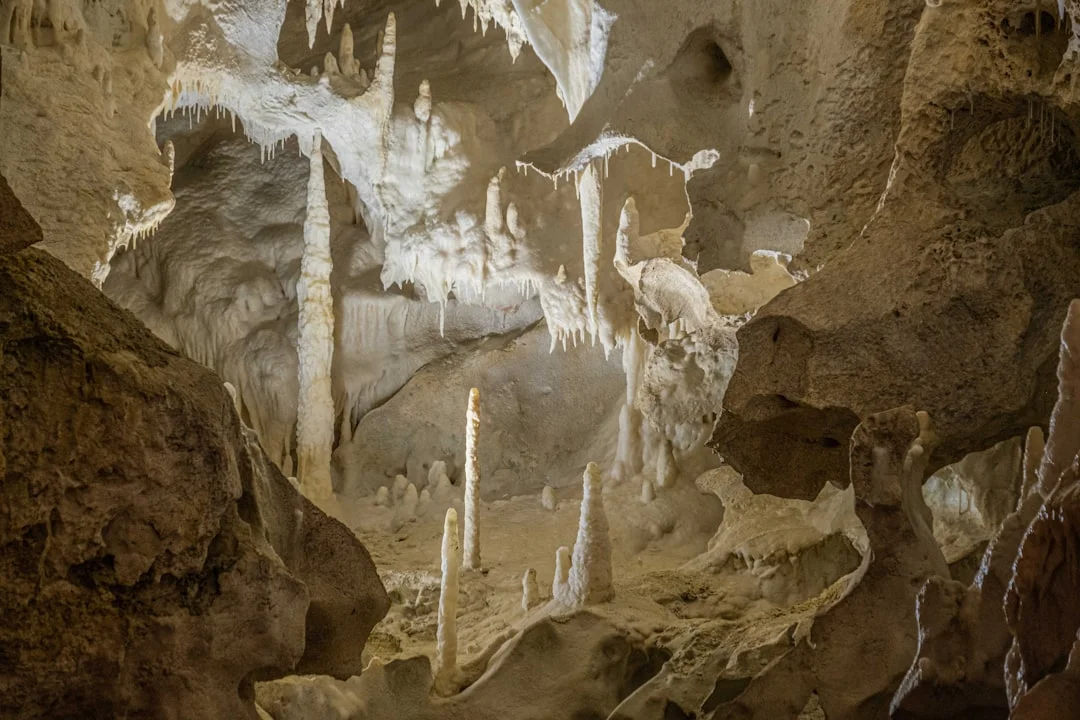
After breaking through some stalactites that blocked a narrow passage, they dropped down into what is now known as the Sala de la Cascada (Waterfall Hall). Instead of just a bat nest, they found human skeletons and ceramic pottery. They had stumbled into a time capsule that had been sealed for thousands of years.
Earlier this year, the Subdelegate of the Government, Javier Salas, presided over a commemorative act to honor this discovery, noting the cave’s status as a driver of tourism and cultural identity for the province. According to La Noción, the event highlighted the cave’s enduring legacy nearly seven decades later.
Why Visit Now?
The Cueva de Nerja is one of the most visited monuments in Spain. In the height of summer, the queues can be long, and the coastal humidity can be intense even before you enter the caverns.
However, visiting in late winter or early spring (right now) offers a distinct advantage:
- Space to Breathe: You can admire the colossal central column in the Hall of the Cataclysm—the largest in the world—without being jostled by large tour groups.
- Temperature Stability: The cave maintains a relatively constant internal temperature. While it’s a refuge from the August heat, it also feels pleasantly distinct from the crisp winter air outside.
- The Museum: Don’t skip the Nerja Museum in the town center (Plaza de España) before or after your cave visit to see the artifacts the boys actually found.
Practical Information for 2026
If you haven’t been in a few years, the facilities have likely been upgraded since your last trip. The botanical gardens surrounding the entrance are now lush and well-maintained, offering a nice walk before your scheduled entry time.
- Location: Maro, roughly 50 minutes driving from Málaga city.
- Tickets: It is highly recommended to book online to secure your slot, even in the off-season.
- Footwear: Wear shoes with good grip. The floor is non-slip, but it is still a damp cave environment.
Whether you are a local who hasn’t visited since a school trip or a newcomer to the Costa del Sol, the 67th anniversary is a great excuse to head east. It is a humbling experience to stand in the dark and realize that, were it not for the curiosity of five teenagers, this underground cathedral might still be sleeping in silence.
We hope you take the time to explore this subterranean wonder while the season is still quiet. It’s a reminder that adventure is often just around the corner—or just down a small hole in the ground.
Leave a Reply