Tag: Travel Guide

  • Sanctuaries of Style: The Best Hotels in Málaga Today

    Sanctuaries of Style: The Best Hotels in Málaga Today

    Málaga has quietly undergone a renaissance. Once viewed primarily as the gateway to the wider Costa del Sol, the city has blossomed into a sophisticated destination in its own right, teeming with museums, gastronomy, and a palpable zest for life. This cultural flowering has been matched by an equally impressive evolution in hospitality. The city’s hotel scene is no longer just about a place to sleep; it is about architecture, history, and the art of living well.

    Whether you seek the grandeur of a five-star resort by the sea or the intimate whisper of history in a restored palace, Málaga’s accommodation portfolio has matured beautifully. Here is a curated selection of the finest hotels in Málaga today, where comfort meets the distinct soul of Andalusia.

    The Grand Dame: Gran Hotel Miramar

    Standing proudly in the La Caleta area, the Gran Hotel Miramar is the undisputed jewel of Málaga’s luxury accommodations. This 5-star Grand Luxury establishment is housed in a building that is a piece of history itself. Designed by architect F. Guerrero Strachan in the 1920s, it was originally inaugurated by King Alfonso XIII.

    The architecture is a breathtaking eclectic blend of Arabic, Mediterranean, and modernist styles. After a meticulous restoration, it reopened to reclaim its throne facing the Mediterranean Sea. The rooms are spacious and bathed in light, often featuring classic decor that nods to the building’s aristocratic past.

    What truly sets the Miramar apart, however, is its sense of space. The lush gardens provide a serene escape from the city bustle, and the pool area feels like a resort miles away from urban life, despite being a short walk from the Centre Pompidou.

    The Historic Gem: Palacio Solecio

    Nestled deep within the labyrinthine streets of the Old Town (Casco Antiguo), Palacio Solecio offers a different kind of luxury—one that is intimate, tactile, and deeply rooted in the 18th century. Located on Calle Granada, just steps from the Picasso Museum, this boutique hotel is a masterclass in restoration.

    Upon entering, you are greeted by the original stone staircase and arches that whisper stories of Genoese merchants who once inhabited the area. The interior design is sophisticated, utilizing warm woods, velvets, and a lighting scheme that creates a cozy, almost mysterious atmosphere.

    It is the perfect choice for the traveler who wishes to be immersed in the heartbeat of the city. The on-site restaurant, Balausta, led by Michelin-starred chef José Carlos García, serves Andalusian cuisine that is as refined as the surroundings.

    The Modern Icon: Only YOU Hotel Málaga

    If the Miramar is the historic queen, Only YOU is the vibrant, cosmopolitan newcomer that has taken the city by storm. Situated at the strategic intersection where the Alameda Principal meets the iconic Calle Larios, this hotel occupies the majestic ‘La Equitativa’ building.

    The vibe here is decidedly cooler and more relaxed. The decor is Art Deco meets Mediterranean chic, with a lobby that encourages socializing. The rooms are designed with a fresh, nautical-inspired palette that feels incredibly current.

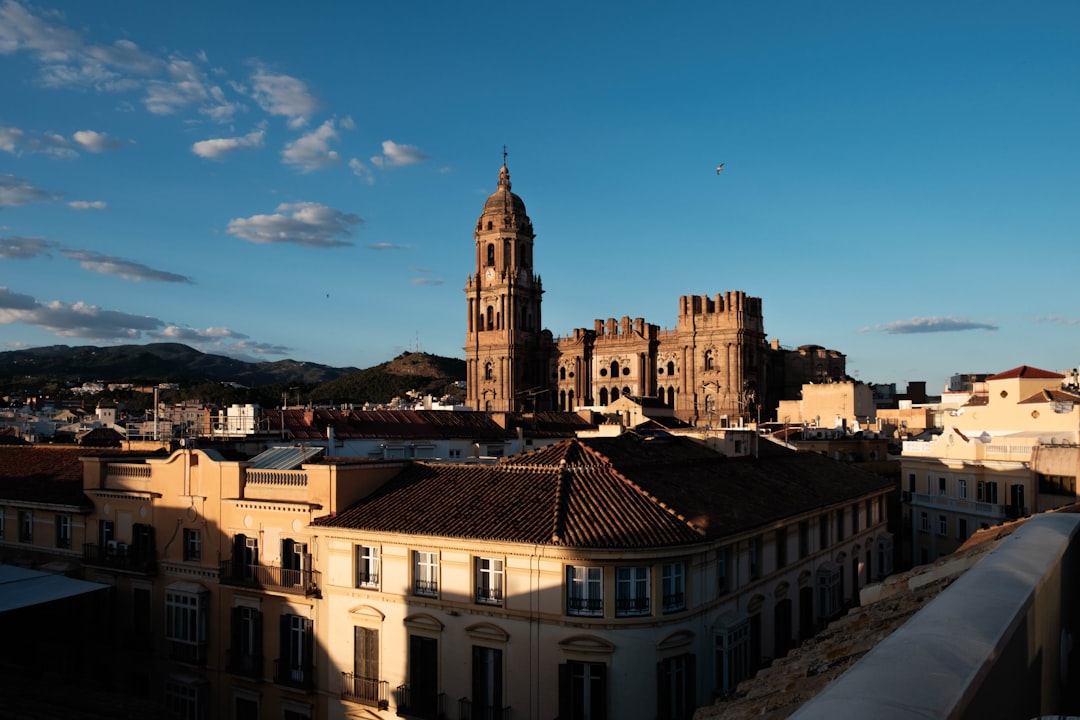
    However, the crowning glory is the rooftop terrace, Lola. Offering panoramic views of the port, the Cathedral (La Manquita), and the sprawling city, it has become one of the most coveted spots for a sunset cocktail. It encapsulates the new energy of Málaga: stylish, open, and endlessly welcoming.

    History Beneath Your Feet: Vincci Selección Posada del Patio

    For those who appreciate archaeology along with their room service, the Vincci Selección Posada del Patio is unique. Located on the edge of the historic center, this 5-star hotel was built over the remains of the city’s old Roman and Arabic walls.

    Rather than burying the past, the hotel has integrated it. Guests can walk over glass floors in the lobby and restaurant to view the ancient foundations beneath. The hotel itself is modern and avant-garde, offering a sharp contrast to the ruins below. The rooftop pool offers a quiet respite, and the location provides easy access to the less tourist-heavy, yet charming, neighborhoods surrounding the river Guadalmedina.

    The Classic View: AC Hotel Málaga Palacio

    It is impossible to discuss Málaga’s hotels without mentioning the AC Hotel Málaga Palacio. While its exterior reflects the architecture of the 1960s, its location is unbeatable, sitting directly between the Cathedral and the Paseo del Parque.

    For decades, its rooftop terrace has been the benchmark for views in the city. From here, you are eye-level with the cathedral bells and have a commanding view of the port entrance. It remains a reliable, high-standard option for business and leisure travelers alike who prioritize location above all else.

    A Note on Choosing Your Stay

    When selecting your haven in Málaga, consider what defines your ideal morning. Do you wish to wake up to the sound of the sea at the Miramar? Do you prefer stepping out directly onto the marble stones of Calle Larios from Only YOU? or do you crave the silence of a hidden alleyway at Palacio Solecio?

    Málaga is a city that welcomes you with open arms, regardless of where you lay your head. We hope this guide helps you find a space that not only offers rest but enhances your connection to this beautiful corner of the world. Safe travels and sweet dreams.
  • A Curator’s Guide to Málaga’s Finest Hotels

    A Curator’s Guide to Málaga’s Finest Hotels

    For decades, Málaga was perceived primarily as a gateway—a transit point where travelers landed before whisking themselves away to the resorts of Marbella or the white villages of the interior. That narrative, however, has been thoroughly rewritten. Today, the capital of the Costa del Sol is a destination of its own distinct gravity, boasting a cultural renaissance that rivals any European city of its size.

    With the arrival of world-class museums and a revitalized culinary scene, the hotel landscape has evolved in kind. The city has moved beyond functional accommodation to embrace true hospitality artistry. We are now seeing a beautiful tension between the historic and the avant-garde; 18th-century palaces are being reborn as boutique retreats, while modernist icons rise along the port.

    Here is an elegant selection of the best hotels in Málaga today, curated for the traveler seeking not just a bed, but a sense of place.

    The Grand Dame: Gran Hotel Miramar

    To understand the magnitude of Málaga’s hospitality history, one must look to the Gran Hotel Miramar. Located in the upscale La Malagueta district, just steps from the shoreline, this property is the undisputed Grand Dame of the city. Originally opened in 1926 by King Alfonso XIII, it has served as a hospital during the Civil War and a courthouse in later years, before being meticulously restored to its Belle Époque glory in 2017.

    Walking through the lobby feels like stepping into a different era. The Moorish revival architecture, with its intricate tiling and soaring arches, pays homage to Andalusia’s complex past. The rooms are dressed in whites and creams, maximizing the incredible light that floods in from the Mediterranean.

    Why we love it: The gardens. Sipping a coffee amidst the manicured lawns and fountains, with the sea breeze rustling the palms, offers a tranquility that is rare in a bustling city.

    Historic Intimacy: Palacio Solecio

    If the Miramar is about grandeur, Palacio Solecio is about intimacy and texture. Tucked away on Calle Granada, in the beating heart of the old Jewish Quarter, this hotel is a masterclass in restoration. Housed in an 18th-century palace, the building lay in ruins for decades until a recent transformation breathed new life into its stone walls.

    Upon entering, you are greeted by the original stone staircase and a magnificent Andalusian courtyard. The design aesthetic is sophisticated and moody, favoring rich velvets, dark woods, and warm lighting that contrasts beautifully with the bright Andalusian sun outside. It feels less like a hotel and more like the private residence of a noble merchant.

    The Highlight: The restaurant, Balausta, helmed by Michelin-starred chef José Carlos García, serves refined takes on local classics within the hotel’s glass-covered patio. It is a dining experience that captures the essence of the south.

    Contemporary Cool: Only YOU Hotel Málaga

    For those who prefer a pulse over a pause, the Only YOU Hotel has changed the energy of the city center. Situated at the entrance of the port, facing the iconic Alameda Principal, this hotel represents the modern, cosmopolitan face of Málaga.

    Since its opening, the lobby has become a meeting point for locals and travelers alike, blurring the lines between a hotel and a social club. The design is fresh, incorporating Art Deco touches with a Mediterranean, nautical flair. The rooms are designed for comfort but with a sharp, fashion-forward aesthetic.

    The Verdict: The rooftop terrace, known as Lolita, offers one of the most dynamic views in the city, sweeping from the Cathedral to the Ferris wheel and the sea. It is the perfect spot for a sunset cocktail before diving into the city’s nightlife.

    The View from Above: Vincci Selección Larios Diez

    Calle Larios is the spine of Málaga, the marble-paved thoroughfare that hosts everything from Easter processions to the Christmas light show. Residing at number 10 is Vincci Selección Larios Diez, a hotel that offers a privileged vantage point over the city’s most famous street.

    This is a hotel for the urbanite. The location is unbeatable for those who wish to step out of the door and be immediately immersed in the shopping and café culture. Despite the bustle below, the rooms are soundproofed sanctuaries of calm. The design utilizes natural materials and neutral tones to create a relaxing atmosphere.

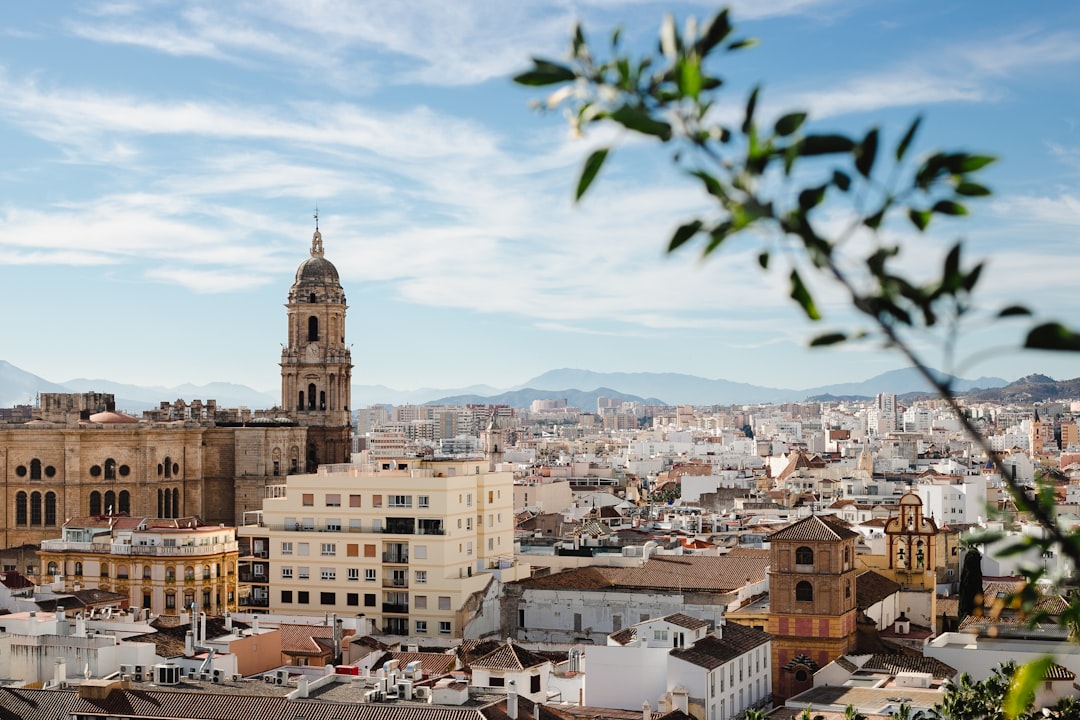
    Don’t Miss: The restaurant El Taller de Larios 10 on the top floor. It offers a unique perspective of the Cathedral tower, allowing you to dine almost eye-level with the bells of the ‘Manquita’.

    A Castle on the Hill: Soho Boutique Castillo de Santa Catalina

    For a stay that feels truly exclusive, one must look upward to the district of El Limonar. The Castillo de Santa Catalina is a Neo-Mudéjar palace built in 1932, sitting atop a hill overlooking the Bay of Málaga. This is not a place for those who want to stumble home from a bar in the city center; it is a retreat for romance and silence.

    With only a handful of rooms, the service is incredibly personalized. The architecture is evocative, featuring horseshoe arches and fortress-like walls. The view from the terrace is arguably the best in the province, offering a panoramic sweep of the Mediterranean that stretches to the horizon.

    It is a place to disconnect, to read a book in the sun, and to watch the ships drift slowly into the harbor below.

    Choosing Your Málaga

    When selecting your accommodation, consider the rhythm of your trip.

    • Choose La Malagueta (Miramar) if you want the beach at your feet and a resort feel.
    • Choose the Old Town (Solecio, Larios Diez) if you want to live among the museums, tapas bars, and history.
    • Choose the Port area (Only YOU) for a modern, energetic vibe and easy transport links.
    • Choose El Limonar (Castillo) for privacy, history, and unparalleled views.

    Málaga is a city that rewards curiosity, and where you choose to rest your head is the first step in that journey. Whether you prefer the whisper of history in a restored palace or the salty breeze of a seafront balcony, we hope this guide helps you find a space that feels like home, even if just for a few nights.

  • Eating in Malaga: A Practical Guide for Locals and Visitors

    Eating in Malaga: A Practical Guide for Locals and Visitors

    Let’s be honest: eating in Malaga is a joy, but it can be confusing if you don’t know the local rules. The city has undergone a massive gastronomic explosion in the last decade, shifting from simple taverns to Michelin stars. However, the soul of Malaga remains in its traditional dishes and the specific rituals of how we eat.

    Whether you are a visitor trying to avoid the tourist traps or a local looking to rediscover the classics, this guide cuts through the noise. Here is what you need to know to eat well in the capital of the Costa del Sol.

    First Things First: The Coffee Code

    If you sit down at a terrace and order “a coffee with milk,” you might get a confused look from the waiter. In Malaga, ordering coffee is an exact science, created by the legendary Café Central (now closed, but the legacy lives on) to measure the ratio of coffee to milk.

    Here is your cheat sheet:

    • Nube: A lot of milk, just a splash of coffee.
    • Sombra: A bit more coffee than a nube, but still milky.
    • Mitad: Half coffee, half milk. The standard.
    • Cortado: Mostly coffee, a splash of milk.
    • Solo: Black coffee.

    Don’t overthink it, just pick your strength. And yes, it is perfectly acceptable to shout your order politely if the bar is noisy. It’s part of the charm.

    The Breakfast Ritual: The Pitufo

    Forget croissants or pancakes. The breakfast of champions here is the Pitufo (Smurf). It refers to the small size of the bread roll, which mimics the size of a Smurf.

    You order a pitufo toasted with:
    * Aceite y tomate: Olive oil and crushed tomato. A classic.
    * Catalana: The above, plus cured ham.
    * Zurrapa or Manteca: If you want something heavier, try these pork lard spreads. They are colored red (with paprika) or white. It sounds heavy, but it is delicious in the winter.

    Lunch: The Holy Trinity

    Lunch in Malaga usually starts late, around 2:00 PM or 2:30 PM. If you go at noon, you will be eating alone.

    1. The Espeto

    This is the icon. Sardines skewered on a bamboo stick and roasted over an open fire (usually in an old fishing boat filled with sand).

    The rules:
    * Eat them with your hands.
    * The best place to eat them is by the sea, specifically in the neighborhoods of El Palo or Pedregalejo. The further east you go along the promenade, the cheaper and more authentic they tend to get.
    * Tradition says to eat them in months that contain the letter “R” (though in reality, the summer months are when they are most popular and fat).

    2. Fritura Malagueña

    Fried fish is everywhere, but good fried fish is an art. It should be crisp, not greasy, and the flour should be light.

    Look for Boquerones (anchovies), either fried or in vinegar. Also, Rosada (Kingklip) is a local favorite white fish that is mild and perfect for children.

    3. Ensalada Malagueña

    Because you cannot live on fried food alone. This salad is a refreshing mix of cooked potatoes, oranges, cod (or tuna), scallions, and Aloreña olives. The contrast between the salty cod and the sweet orange is what makes this dish spectacular.

    The Spoon Dish: Gazpachuelo

    If you visit in winter or just want comfort food, ask for Gazpachuelo. It is a warm soup that looks like hot milk, but it is actually a fish stock emulsion made with garlic mayonnaise (alioli), potato, and white fish.

    It sounds strange to foreigners—warm mayonnaise soup?—but it is incredibly delicate and savory. It was originally a fisherman’s dish made from cheap ingredients, and now it is a delicacy.

    A Note on Tapas

    Unlike Granada, where tapas are often free and massive with every drink, Malaga operates differently. While you might get some olives or lupin beans (altramuces) with your beer, you usually pay for tapas here. This is actually good news: it means the quality is higher, and you can choose exactly what you want.

    The Sweet Finish

    If you have space left, walk into a bakery and ask for a Torta Loca (Crazy Cake). It consists of two rounds of puff pastry filled with custard, topped with an orange glaze and a cherry. It’s sweet, sticky, and undeniably Malagueño.

    Where to Shop: Atarazanas Market

    To understand the food, you have to see the raw ingredients. The Mercado Central de Atarazanas is essential. The building itself is a marvel, featuring a Moorish archway from the old shipyard.

    Inside, it’s loud and vibrant. You can buy fresh produce, but you can also stand at the bars inside the market and eat fresh prawns or skewers right off the grill. It is one of the best “fast food” experiences in the city.

    Final Practical Tips

    • Tipping: It is not mandatory, but leaving small change or rounding up is polite and appreciated.
    • Bread: In restaurants, bread is often placed on the table automatically and charged for (cubierto). If you don’t want it, say so immediately, though it is usually worth the euro to soak up the sauces.
    • Water: Tap water in Malaga is safe to drink, though many locals prefer bottled water due to the high mineral content (hard water) which affects the taste.

    Malaga’s food scene is about fresh ingredients and simple preparation. We don’t hide the flavors behind heavy sauces. We hope this guide helps you navigate the menus with confidence. There is always a new tavern to discover or an old favorite to revisit, so get out there and enjoy.