Tag: Local History

  • Antonio Martín: Malaga Beachfront Icon Evades Demolition

    Antonio Martín: Malaga Beachfront Icon Evades Demolition

    For decades, Antonio Martín has stood as a symbol of Malaga’s coastal gastronomy. Situated on the prominent beachfront of La Malagueta, this iconic restaurant has served traditional Andalusian seafood to generations of locals, tourists, and cultural icons. Yet, its survival in recent years has been anything but guaranteed.

    Five years ago, the historic establishment seemed destined for the wrecking ball. However, against the odds, the restaurant remains open, active, and fully operational.

    The Threat of the Wrecking Ball

    The uncertainty surrounding Antonio Martín stems from Spain’s strict coastal sustainability laws (Ley de Costas), which regulate public domain land along the maritime-terrestrial zone. Originally, the restaurant’s concession was set to expire, and plans were drawn up to demolish the structure to restore the beachfront to its natural state.

    For many malagueños, the loss of Antonio Martín would mean losing a piece of the city’s living history. Founded in the mid-19th century, the venue transitioned from a humble beachfront tavern into a high-profile culinary landmark. Much like the historic El Pimpi bodega, which continues to attract global icons, Antonio Martín famously hosted figures like Ernest Hemingway, Pablo Picasso, and legendary bullfighters.

    A Lifeline from the Regional Government

    Instead of facing the bulldozers, the restaurant has managed to secure its place on the Malagueta shore. As detailed in a report by El Español, the Andalusian regional government (Junta de Andalucía) has repeatedly stepped in to grant temporary concessions and extensions.

    These administrative lifelines have kept the venue alive, allowing it to continue operating. This pragmatic approach highlights the ongoing balance local authorities must strike between environmental preservation and protecting Malaga’s cultural and economic heritage.

    Dining at an Icon Today

    For visitors looking to experience classic Malaga dining, Antonio Martín offers an unbeatable location. While the management and culinary style have evolved over the decades—even as the local food scene expands to embrace international trends like Nordic dining in Malaga—the experience of dining steps away from the Mediterranean remains unchanged.

    Key highlights of the dining experience include:

    • Prime Location: Situated right on the promenade of La Malagueta, easily accessible from the city center.
    • Local Flavors: Traditional fried fish (pescaíto frito), fresh seafood, and classic rice dishes.
    • Historic Atmosphere: A dining space that carries the weight of Malaga’s 19th and 20th-century social history.

    While the long-term future of the physical structure will always be tied to coastal regulations, the survival of Antonio Martín serves as a reminder of Malaga’s resilience and its deep-rooted connection to seaside gastronomy.

    As Malaga continues to modernize and grow at a rapid pace, holding onto these historic culinary anchors becomes even more meaningful. We hope that local authorities and business owners can continue to find a harmonious balance, ensuring that future generations can still enjoy a meal where the city’s history meets the sea.
  • Vélez-Málaga to Award Gold Medal to Franciscan Order

    Vélez-Málaga to Award Gold Medal to Franciscan Order

    The City Council of Vélez-Málaga has officially initiated administrative proceedings to bestow the city’s prestigious Gold Medal (Medalla de Oro) upon the Franciscan Order. This distinction represents one of the highest civic honors available under the municipality’s official regulations for honors and distinctions.

    For expats and long-term residents living in the Axarquía region, this event offers a unique window into the deep historical and cultural roots that continue to shape local identity. It highlights the municipality’s ongoing commitment to community values, following other recent achievements such as when Vélez-Málaga won the ‘Escoba de Platino’ eco-award for its modern urban initiatives.

    Recognizing a Centuries-Old Legacy

    As reported by Diario Sur, the proposal aims to formally recognize the profound historical footprint and cultural legacy that the Franciscan Order has left in Vélez-Málaga.

    The presence of the Franciscans in the capital of the Axarquía is not merely a matter of religious history; it is woven into the very urban and social fabric of the town. For centuries, the order has played an active role in education, social support, and the preservation of local heritage.

    Key Historical Landmarks

    To understand the scale of this recognition, one must look at the physical and cultural landmarks associated with the order in Vélez-Málaga:

    • Convento de San Francisco: Established in the late 15th century following the Christian conquest of the city, this convent became a central hub for spiritual and community life.
    • Architectural Heritage: The church of San Francisco, with its striking Mudéjar and Renaissance elements, stands as a testament to the artistic evolution of the region.
    • Social and Educational Contributions: Beyond the stone walls, the Franciscan friars have historically been key actors in providing social assistance and education to the local population during challenging historical epochs.

    What the Gold Medal Represents

    The Medalla de Oro is not awarded lightly. It requires a rigorous administrative process, including the creation of an official file (expediente) that documents the merits of the nominee. This process involves gathering historical evidence, community testimonials, and institutional support to justify the distinction.

    By initiating this file, Vélez-Málaga joins a long-standing Spanish tradition of honoring institutions that have acted as pillars of the community. For the local government, this award is a way to bridge the gap between the town’s illustrious past and its vibrant present.

    Connecting with Axarquía’s Heritage

    For the international community calling the Axarquía home, milestones like this highlight why Vélez-Málaga is much more than just a gateway to the coast. The town serves as the cultural heart of the eastern Costa del Sol, boasting a rich tapestry of history that predates modern tourism by centuries.

    Exploring the footprint of the Franciscans offers a rewarding weekend itinerary. Visitors can wander through the historic center, visit the San Francisco complex, and appreciate how ancient traditions continue to influence contemporary local life and festivities.

    Understanding these deep-rooted traditions allows us to appreciate the true character of the Axarquía. It reminds us that behind the sunny beaches and beautiful mountain views lies a community built on centuries of shared history, resilience, and quiet dedication.

  • Als Robert De Niro in der Kathedrale von Málaga predigte

    Als Robert De Niro in der Kathedrale von Málaga predigte

    Málaga ist auf der Kinoleinwand kein Unbekannter, aber einige Filmmomente hinterlassen einen bleibenden Eindruck in der lokalen Geschichte der Stadt. Wenn Sie jemals die Kathedrale von Málaga – liebevoll La Manquita genannt – betreten haben, wissen Sie bereits, dass sie eine stille Ehrfurcht gebietet. Aber vor Jahren wurde genau diese Ehrfurcht von keinem Geringeren als dem Hollywood-Schwergewicht Robert De Niro auf Film gebannt.

    Ganz gleich, ob Sie ein in der Stadt lebender Filmliebhaber sind oder ein Einheimischer, der nach einer tollen Anekdote für seine Gäste sucht: Die Geschichte, wie unsere Kathedrale als peruanische Basilika aus dem 18. Jahrhundert diente, ist ein faszinierendes Stück der Filmgeschichte Málagas.

    Hollywood kommt nach Andalusien

    Als die Produktion von Die Brücke von San Luis Rey in Málaga Einzug hielt, brachte sie eine ganz besondere Energie in das historische Zentrum. Der Film, der auf Thornton Wilders mit dem Pulitzer-Preis ausgezeichneten Roman basiert, benötigte Drehorte, die überzeugend das Lima (Peru) der Kolonialzeit darstellen konnten. Málaga mit seinem reichen architektonischen Erbe und den gut erhaltenen historischen Stätten passte perfekt in dieses Profil.

    Die riesige Produktion verbrachte acht Wochen mit Dreharbeiten in und um die Stadt. Es war nicht nur ein kurzer Zwischenstopp; die Crew tauchte tief in die lokale Kulisse ein und nutzte historische Ecken, um die Erzählung aus dem 18. Jahrhundert zum Leben zu erwecken. Neben De Niro brachte die Besetzung mit gefeierten Schauspielern wie Kathy Bates und Harvey Keitel eine Welle von Star-Power an die Costa del Sol.

    De Niro auf der Kanzel

    Die denkwürdigste lokale Anekdote aus dieser Produktion dreht sich um die Catedral de la Encarnación. Im Film spielt Robert De Niro den imposanten Erzbischof von Lima.

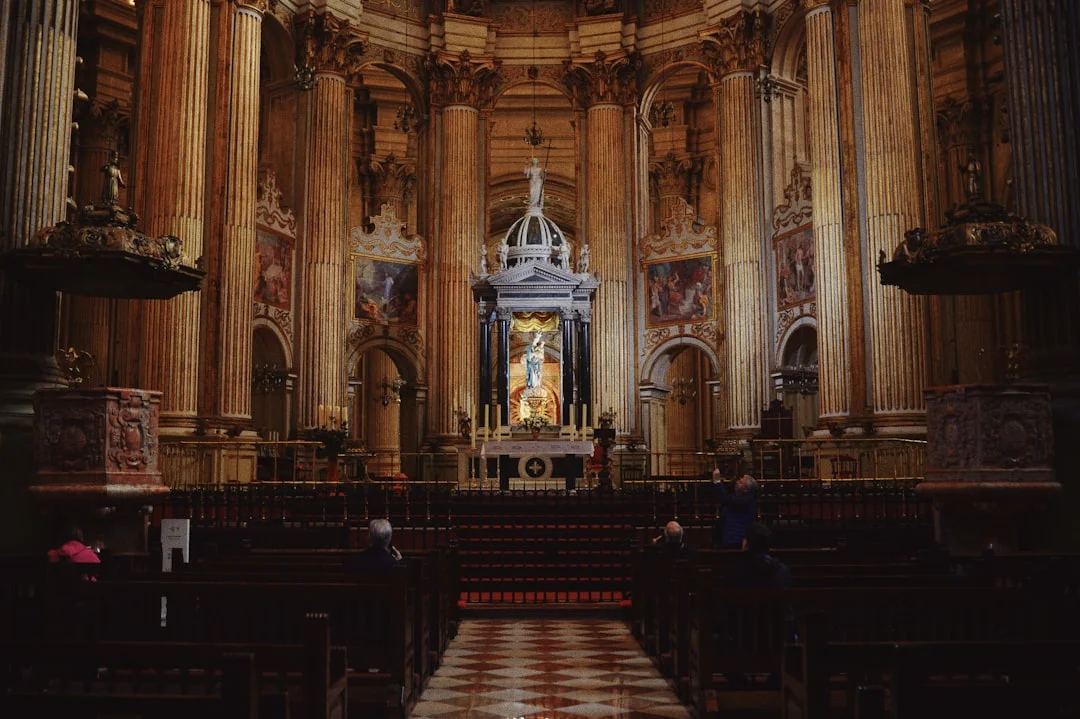
    Um die Würde seiner Rolle einzufangen, wählte der Regisseur die atemberaubende Holzkanzel der Kathedrale als Schauplatz für eine Schlüsselszene. In kunstvolle historische Kirchengewänder gekleidet, hielt De Niro eine Predigt von genau dem Ort aus, an dem der lokale Klerus seit Jahrhunderten steht. Die Erhabenheit des Innenraums der Kathedrale mit ihren hoch aufragenden korinthischen Säulen und den aufwendigen Holzarbeiten bot eine atemberaubende, authentische Kulisse, die kein Filmstudio nachbilden konnte.

    Wie kürzlich von La Opinión de Málaga hervorgehoben wurde, blickt die Kathedrale auf eine lange, stolze Geschichte als cineastische Leinwand zurück und hat im Laufe der Jahrzehnte Legenden von David Niven bis De Niro beherbergt.

    Ein Detail für Ihren nächsten Besuch

    Wenn Sie das nächste Mal durch das historische Zentrum schlendern und beschließen, der Kathedrale einen Besuch abzustatten, behalten Sie diese kleine Anekdote im Hinterkopf.

    Worauf Sie achten sollten:

    • Die Kanzel: Suchen Sie die aufwendig geschnitzten Holzkanzeln in der Nähe des Hauptaltars. Stellen Sie sich die filmische Beleuchtung und eine hundertköpfige Crew vor, die ganz still wurde, als De Niro seinen Text sprach.
    • Der Chor: Beachten Sie das umliegende Chorgestühl aus Mahagoni (geschnitzt von Pedro de Mena). Die Handwerkskunst in diesem Bereich machte es zu einem natürlichen cineastischen Mittelpunkt.
    • Die Atmosphäre: Nehmen Sie sich einen Moment Zeit, um zu würdigen, wie die natürliche Akustik des Gebäudes eine einzelne Stimme verstärkt – eine Eigenschaft, die die Tonabteilung während der Dreharbeiten zweifellos zu schätzen wusste.

    Es ist immer wieder erdend, sich daran zu erinnern, dass die Denkmäler, an denen wir jeden Tag auf dem Weg zu einem Kaffee oder bei unseren Erledigungen vorbeigehen, bereits tausend Leben gelebt haben. Sie sind Kultstätten, historische Wahrzeichen und manchmal auch die dramatische Kulisse für die Hollywood-Prominenz. Unsere Stadt durch die Linse des Kinos zu betrachten, verleiht dem alltäglichen Zauber des Lebens in Málaga nur eine weitere wunderbare Facette.

  • When Robert De Niro Preached in Málaga’s Cathedral

    When Robert De Niro Preached in Málaga’s Cathedral

    Málaga is no stranger to the silver screen, but some cinematic moments leave a lasting imprint on the city’s local lore. If you’ve ever stepped inside the Málaga Cathedral—affectionately known as La Manquita—you already know it commands a quiet reverence. But years ago, that same reverence was captured on film by none other than Hollywood heavyweight Robert De Niro.

    Whether you are a film buff living in the city or a local looking for a great anecdote to share with visiting friends, the story of how our cathedral doubled as an 18th-century Peruvian basilica is a fascinating piece of Málaga’s cinematic history.

    Hollywood Comes to Andalucía

    When the production of The Bridge of San Luis Rey descended upon Málaga, it brought a unique energy to the historic center. The film, based on Thornton Wilder’s Pulitzer Prize-winning novel, required locations that could convincingly stand in for colonial-era Lima, Peru. Málaga, with its rich architectural heritage and preserved historical sites, fit the bill perfectly.

    The massive production spent eight weeks filming in and around the city. It wasn’t just a quick stopover; the crew integrated deeply into the local landscape, utilizing historic corners to bring the 18th-century narrative to life. Alongside De Niro, the cast brought a wave of star power to the Costa del Sol, featuring celebrated actors like Kathy Bates and Harvey Keitel.

    De Niro at the Pulpit

    The most memorable local anecdote from this production revolves around the Cathedral of the Incarnation. In the film, Robert De Niro plays the imposing Archbishop of Lima.

    To capture the gravitas of his role, the director chose the Cathedral’s stunning wooden pulpit as the setting for a pivotal scene. Dressed in ornate historical religious vestments, De Niro delivered a sermon from the very spot where local clergy have stood for centuries. The grandeur of the cathedral’s interior, with its towering Corinthian columns and intricate woodwork, provided a breathtaking, authentic backdrop that no soundstage could replicate.

    As recently highlighted by La Opinión de Málaga, the Cathedral has a long, proud history of serving as a cinematic canvas, hosting legends ranging from David Niven to De Niro over the decades.

    A Detail for Your Next Visit

    Next time you take a stroll through the historic center and decide to pop into the Cathedral, keep this bit of trivia in your back pocket.

    What to Look For:

    • The Pulpit: Locate the intricately carved wooden pulpits near the main altar. Imagine the cinematic lighting and a crew of hundreds hushed as De Niro delivered his lines.
    • The Choir: Notice the surrounding mahogany choir stalls (carved by Pedro de Mena). The craftsmanship in this area made it a naturally cinematic focal point.
    • The Atmosphere: Take a moment to appreciate how the building’s natural acoustics amplify a single voice—a feature the sound department undoubtedly appreciated during filming.

    It is always grounding to remember that the monuments we walk past every day on our way to grab a coffee or run errands have lived a thousand lives. They are places of worship, historical landmarks, and sometimes, the dramatic backdrop for Hollywood royalty. Seeing our city through the lens of cinema just adds one more layer to the everyday magic of living in Málaga.

  • Christine Ruiz-Picasso tot: Sie brachte Picasso nach Málaga

    Christine Ruiz-Picasso tot: Sie brachte Picasso nach Málaga

    Wenn Sie jemals die Calle San Agustín entlanggeschlendert sind und den wunderschönen Palacio de Buenavista betreten haben, dann haben Sie das schlagende Herz der Kunstszene Málagas erlebt: das Museo Picasso. Für die meisten Besucher und Einheimischen ist es ein absolutes Muss. Doch hinter den Weltklasse-Ausstellungen und der Wiederbelebung der Kulturlandschaft unserer Stadt verbirgt sich eine Geschichte von Familie, Hingabe und einem gehaltenen Versprechen.

    Am 7. April 2026 nahm Málaga Abschied von Christine Ruiz-Picasso, der Schwiegertochter des legendären Malers. Wie Diario Sur berichtete, war sie die wichtigste treibende Kraft bei der Gründung des Museo Picasso Málaga. Ohne sie würde das Museum schlichtweg nicht existieren, und die moderne Geschichte der Stadt sähe vielleicht ganz anders aus.

    Eine Reise zurück zu den Wurzeln

    Um den Einfluss von Christine zu verstehen, müssen wir in die 1950er Jahre zurückblicken. Pablo Picasso hegte eine tiefe, beständige Zuneigung zu seiner Geburtsstadt, konnte aber aufgrund des damaligen politischen Klimas nicht zurückkehren. Stattdessen reisten sein ältester Sohn Paul und dessen Frau Christine an seiner Stelle nach Málaga.

    Sie spazierten durch die Straßen des historischen Zentrums, nahmen das mediterrane Licht in sich auf und verbanden sich mit der Stadt, die die frühe Vision des jungen Künstlers geprägt hatte. Während dieser Besuche wurde der Grundstein gelegt: Picasso wünschte sich, dass sein Werk ein dauerhaftes Zuhause in Málaga finden würde.

    Die erste Botschafterin

    Nach dem Tod von Picasso und dem späteren Ableben von Paul nahm es Christine auf sich, dafür zu sorgen, dass der Wunsch des Künstlers nicht in Vergessenheit geriet. Sie wurde zur ersten und engagiertesten Botschafterin des Projekts.

    Sich in den komplexen Welten der internationalen Kunstlogistik, der Familiennachlässe und der lokalen Politik zurechtzufinden, ist keine kleine Leistung. Dennoch ging Christine diese monumentale Aufgabe mit einer pragmatischen, zielstrebigen Entschlossenheit an. Sie spendete und verlieh großzügig Hunderte von Werken aus ihrer Privatsammlung – Kunstwerke von immensem persönlichen Wert, darunter intime Familienporträts, Skizzen und Keramiken, die eine andere, persönlichere Seite des Genies zeigten.

    Als das Museo Picasso Málaga schließlich im Jahr 2003 seine Pforten öffnete, war das ein transformativer Moment. Es beschleunigte Málagas Entwicklung von einem einfachen Verkehrsknotenpunkt für die Costa del Sol zu einer der führenden kulturellen Destinationen Europas.

    Eine dauerhafte Prägung Málagas

    Heute steht das Museum nicht nur als Zeugnis für Pablo Picassos Genie, sondern auch für Christines unbeirrbare Vision. Es ist leicht, die Institution als selbstverständlich anzusehen, wenn Sie an einem sonnigen Dienstagmorgen an den langen Schlangen erwartungsvoller Besucher vorbeigehen. Aber jedes Gemälde an diesen Wänden stellt eine Brücke dar, die Christine zwischen einem weltberühmten Künstler und seinen bescheidenen Anfängen geschlagen hat.

    Ihre Arbeit erinnert uns daran, dass Kultur nicht einfach durch Zufall entsteht. Sie braucht Vorkämpfer. Sie erfordert Menschen, die bereit sind, sich durch bürokratische Hürden zu kämpfen, unermüdlich zu verhandeln und ihre privaten Schätze mit der Öffentlichkeit zu teilen.

    Während wir uns von Christine Ruiz-Picasso verabschieden, können wir Trost in dem Wissen finden, dass ihr Vermächtnis dauerhaft in das Gewebe von Málaga eingewoben ist. Wenn Sie das nächste Mal durch die Türen des Palacio de Buenavista treten, nehmen Sie sich einen Moment Zeit, um über die Leinwände hinauszuschauen. Erinnern Sie sich an die Frau, die Picasso nach Hause holte und dafür sorgte, dass kommende Generationen seine Brillanz genau dort erleben können, wo sie hingehört.

  • Christine Ruiz-Picasso: Who Brought Picasso Home to Málaga

    Christine Ruiz-Picasso: Who Brought Picasso Home to Málaga

    If you have ever strolled down Calle San Agustín and stepped into the beautiful Palacio de Buenavista, you have experienced the beating heart of Málaga’s art scene: the Museo Picasso. For most visitors and locals, it is a mandatory stop. But behind the world-class exhibitions and the revitalization of our city’s cultural landscape—an enduring legacy quite distinct from the major real estate shifts currently reshaping Marbella—lies a story of family, dedication, and a promise kept.

    On April 7, 2026, Málaga bid farewell to Christine Ruiz-Picasso, the daughter-in-law of the legendary painter. As reported by Diario Sur, she was the primary driving force behind the creation of the Museo Picasso Málaga. Without her, the museum simply wouldn’t exist, and the city’s modern history might look very different.

    A Journey Back to the Roots

    To understand Christine’s impact, we have to look back to the 1950s. Pablo Picasso had a deep, enduring affection for the city of his birth, but due to the political climate of the time, he could not return. Instead, his eldest son, Paul, and Paul’s wife, Christine, traveled to Málaga in his place, long before the city would face modern challenges like its ongoing housing crisis and recent eviction protests.

    They walked the streets of the historic center, absorbed the Mediterranean light, and connected with the city that had shaped the young artist’s early vision. It was during these visits that the seed was planted: Picasso wanted his work to have a permanent home in Málaga, cementing a cultural legacy that now offers countless art exhibitions to explore each weekend.

    The First Ambassador

    Following Picasso’s death, and later Paul’s passing, Christine took it upon herself to ensure that the artist’s wish did not fade into obscurity. She became the project’s first and fiercest ambassador.

    Navigating the complex worlds of international art logistics, family estates, and local politics is no small feat. Yet, Christine approached the monumental task with a practical, no-nonsense determination. She generously donated and loaned hundreds of pieces from her private collection—works that held immense personal value, including intimate family portraits, sketches, and ceramics that showcased a different, more personal side of the genius.

    When the Museo Picasso Málaga finally opened its doors in 2003, it was a transformative moment. It catalyzed Málaga’s evolution from a simple transit hub for the Costa del Sol into a premier European cultural destination.

    A Lasting Imprint on Málaga

    Today, the museum stands as a testament not just to Pablo Picasso’s genius, but to Christine’s unwavering vision. It is easy to take the institution for granted when you walk past the long lines of eager visitors on a sunny Tuesday morning. But every painting on those walls represents a bridge built by Christine between a world-renowned artist and his humble beginnings.

    Her work reminds us that culture doesn’t just happen by accident. It requires champions. It requires people who are willing to push through red tape, negotiate tirelessly, and share their private treasures with the public.

    As we say goodbye to Christine Ruiz-Picasso, we can take comfort in knowing her legacy is permanently woven into the fabric of Málaga. The next time you walk through the doors of the Palacio de Buenavista, take a moment to look beyond the canvas. Remember the woman who brought Picasso home, ensuring that generations to come can experience his brilliance exactly where it belongs.