Tag: Green Tech

  • Biotonomy schlägt interaktive Bäume für die Plaza de la Marina vor

    Biotonomy schlägt interaktive Bäume für die Plaza de la Marina vor

    Verschmelzung von Natur und IoT im Herzen von Málaga

    Málagas Entwicklung zu einem bedeutenden europäischen Technologie- und Smart-City-Hub tritt in die nächste logische Phase ein: die Umgestaltung des physischen Stadtbildes. Während die Stadt erfolgreich multinationale Tech-Giganten angelockt hat, richten lokale Innovatoren ihre Aufmerksamkeit nun auf die Straßen und entwickeln alles von Apps zur Kartierung authentischer lokaler Orte bis hin zu wegweisender Bio-Architektur.

    Ende Juli 2026 präsentierte das lokale Biotechnologie-Startup Biotonomy einen futuristischen Vorschlag zur Neugestaltung einer der symbolträchtigsten, aber am stärksten zubetonierten Transitbereiche Málagas: der Plaza de la Marina. Das Projekt dreht sich um die Installation von „interaktiven Bäumen“ – Hybridstrukturen, die lebendige Natur mit fortschrittlichen Umweltsensoren und intelligenten Bewässerungssystemen verbinden. Dieses Vorhaben reiht sich ein in die jüngste Modernisierungswelle der Stadt, zu der auch spektakuläre private Projekte wie das neue Luxus-Rooftop mit Infinity-Pool im ME Málaga gehören.

    Die Vision für die Plaza de la Marina

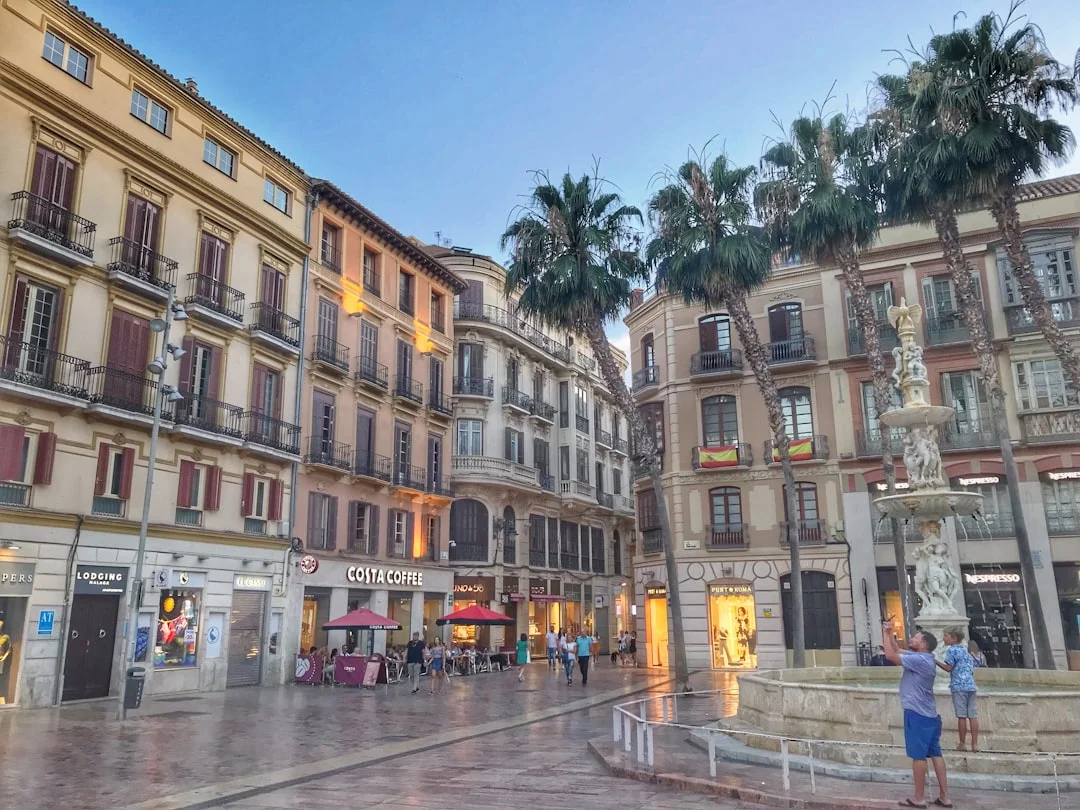
    Die Plaza de la Marina dient als wichtigstes Tor zwischen dem historischen Zentrum (Calle Larios), dem Hafen (Muelle Uno) und der Alameda Principal. Trotz ihrer strategischen Lage ist die Plaza weitgehend gepflastert und verfügt über kaum Schatten spendende Baumkronen, was vor allem daran liegt, dass die darunter liegende Tiefgarage das Pflanzen traditioneller, tiefwurzelnder Bäume verhindert. Diese Gestaltung führt in den heißen Sommermonaten Málagas zu einem ausgeprägten „urbanen Hitzeinseleffekt“.

    Laut Juan Ignacio Marín, Entwicklungsdirektor von Biotonomy, in einem kürzlichen Interview mit Onda Cero Málaga, ist es der Traum des Startups, diese architektonische Einschränkung durch modulare, technologiegestützte Grünanlagen zu überwinden.

    Was sind interaktive Bäume?

    Im Gegensatz zu herkömmlichen Zierpflanzen sind interaktive Bäume hochentwickelte biologische Systeme, die mehrere Funktionen gleichzeitig erfüllen sollen:

    • Mikroklimaregulierung: Sie nutzen hydroponische und vertikale Gärtnereitechniken, um die Blattoberfläche zu maximieren und so die natürliche Kühlung durch Evapotranspiration ohne tiefes Erdreich zu optimieren.
    • Intelligentes Wassermanagement: Integrierte Sensoren überwachen die Feuchtigkeit in Echtzeit und nutzen recyceltes Wasser oder Kondenswasser, um die Pflanzen mit minimalem Abfall zu versorgen.
    • Erfassung von Umweltdaten: Eingebaute IoT-Sensoren erfassen die lokale Luftqualität, Luftfeuchtigkeit, Temperatur und den Fußgängerstrom und leiten diese wertvollen Daten an die Smart-Grid-Infrastruktur der Stadt weiter.
    • Interaktion mit der Öffentlichkeit: Die Strukturen können mit reaktionsfähiger Beleuchtung, Ladestationen oder Informationsdisplays ausgestattet sein, die auf Umweltveränderungen oder die Anwesenheit von Bürgern reagieren.

    Ein datengestützter Ansatz gegen städtische Hitze

    Aus analytischer Sicht geht die Implementierung dieser Technologie eine kritische kommunale Herausforderung an. Urbane Hitzeinseln erhöhen den Energieverbrauch in umliegenden Gebäuden erheblich und mindern die Aufenthaltsqualität im öffentlichen Raum.

    Metrik / Merkmal
    Traditionelle Stadtbäume
    Interaktive Bäume von Biotonomy
    Erforderliche Bodentiefe
    Tief (ungeeignet für Tiefgaragendächer)
    Minimal (modular / hydroponisch)
    Wassereffizienz
    Standard (anfällig für Verdunstung)
    Hoch (sensorgesteuerte, geschlossene Kreisläufe)
    Datenintegration
    Keine
    Echtzeit-Verfolgung von Luftqualität & Klima
    Installationsgeschwindigkeit
    Jahre bis zur vollständigen Baumkrone
    Nahezu sofortiger Schatten und biologische Wirkung

    Durch die Verwendung von Leichtbaustrukturen umgeht Biotonomy die statischen Gewichtsgrenzen, die durch das Dach der Tiefgarage vorgegeben sind. Dies macht es technisch machbar, eine dichte vertikale Vegetation dorthin zu bringen, wo herkömmliche Bäume einfach nicht wachsen können.

    Herausforderungen und nächste Schritte

    Obwohl das konzeptionelle Rahmenwerk äußerst vielversprechend ist, erfordert die Umsetzung eines solchen Projekts in einem stark frequentierten öffentlichen Raum die Bewältigung mehrerer praktischer Hürden:

    1. Wartungskosten: Sensorgesteuerte biologische Systeme erfordern im Vergleich zu herkömmlichen städtischen Parks eine spezialisierte Instandhaltung.
    2. Öffentliche Finanzierung und Genehmigungen: Der Übergang von einem Startup-Entwurf zur kommunalen Umsetzung erfordert angesichts der Nähe zum historischen Zentrum von Málaga strenge öffentliche Vergabeverfahren und denkmalpflegerische Prüfungen.
    3. Vandalismus und Haltbarkeit: High-Tech-Komponenten, die den Elementen und dem starken Touristenverkehr ausgesetzt sind, müssen ausreichend robust gestaltet sein.

    Bei Erfolg könnte diese Initiative Málaga als Pionier der urbanen Bio-Architektur positionieren und beweisen, dass die Städte von morgen sich nicht zwischen technologischem Fortschritt und natürlichen Ökosystemen entscheiden müssen.

    Wenn wir in die Zukunft unserer städtischen Räume blicken, erinnern uns Projekte wie dieses daran, dass Technologie dann am besten ist, wenn sie uns wieder mit der Natur verbindet. Die Balance zwischen betonierter Entwicklung und lebendigen, atmenden Grünflächen ist keine leichte Aufgabe, aber es ist eine Reise, die sich für die Gesundheit und das Wohlbefinden aller, die Málaga ihre Heimat nennen, absolut lohnt.
  • Biotonomy Pitches Interactive Trees for Plaza de la Marina

    Biotonomy Pitches Interactive Trees for Plaza de la Marina

    Merging Nature and IoT in the Heart of Málaga

    Málaga’s trajectory as a prominent European technology and smart-city hub is entering its next logical phase: transforming the physical urban landscape. While the city has successfully attracted multinational tech giants, local innovators are turning their attention to the streets, developing everything from apps that map authentic local spots to cutting-edge bio-architecture.

    In late July 2026, local biotechnology startup Biotonomy presented a futuristic proposal to redesign one of Málaga’s most iconic yet concrete-heavy transit zones: Plaza de la Marina. At a time when the city is rapidly upgrading its urban landscape—from premium hospitality additions like the new ME Málaga luxury rooftop and infinity pool to green public spaces—this project revolves around the installation of “interactive trees”—hybrid structures that blend living nature with advanced environmental sensors and smart irrigation systems.

    The Vision for Plaza de la Marina

    Plaza de la Marina serves as the primary gateway between the historic center (Calle Larios), the port (Muelle Uno), and the Alameda Principal. Despite its strategic location, the plaza is largely paved and lacks substantial canopy cover, primarily because the extensive underground parking garage restricts the planting of traditional deep-rooted trees. This layout creates a pronounced “urban heat island” effect during Málaga’s hot summer months.

    According to Juan Ignacio Marín, Development Director of Biotonomy, in a recent interview with Onda Cero Málaga, the startup’s dream is to address this architectural limitation using modular, tech-enabled green installations.

    What Are Interactive Trees?

    Unlike standard ornamental plants, interactive trees are engineered biological systems designed to perform multiple functions simultaneously:

    • Microclimate Regulation: They utilize hydroponic and vertical gardening techniques to maximize leaf surface area, optimizing natural cooling through evapotranspiration without requiring deep soil.
    • Smart Water Management: Integrated sensors monitor moisture levels in real-time, utilizing recycled water or condensation capture to sustain the plants with minimal waste.
    • Environmental Data Collection: Built-in IoT sensors track local air quality, humidity, temperature, and pedestrian flow, feeding valuable data back to the city’s smart-grid infrastructure.
    • Public Engagement: The structures can feature responsive lighting, charging stations, or educational displays that react to environmental changes or citizen presence.

    A Data-Driven Approach to Urban Heat

    From an analytical perspective, implementing this technology addresses a critical municipal challenge. Urban heat islands significantly increase energy consumption in surrounding buildings and lower the quality of public spaces.

    Metric / Feature
    Traditional Urban Trees
    Biotonomy’s Interactive Trees
    Soil Depth Required
    Deep (unsuitable for plaza roofs)
    Minimal (modular / hydroponic)
    Water Efficiency
    Standard (subject to evaporation)
    High (sensor-controlled closed loops)
    Data Integration
    None
    Real-time air quality & climate tracking
    Installation Speed
    Years to reach full canopy
    Near-instant shade and biological impact

    By utilizing lightweight structures, Biotonomy bypasses the structural weight limits imposed by the underground parking roof, making it technically feasible to introduce dense vertical vegetation where standard trees simply cannot grow.

    Challenges and Next Steps

    While the conceptual framework is highly promising, executing such a project in a high-traffic public space requires navigating several practical hurdles:

    1. Maintenance Costs: Sensor-driven biological systems require specialized upkeep compared to standard municipal parks.
    2. Public Funding and Approvals: Transitioning from a startup proposal to municipal execution involves rigorous public procurement and heritage conservation reviews, given the proximity to Málaga’s historic center.
    3. Vandalism and Durability: High-tech components exposed to the elements and heavy tourist traffic must be sufficiently ruggedized.

    If successful, this initiative could position Málaga as a pioneer in urban bio-architecture, proving that the cities of tomorrow do not have to choose between technological progress and natural ecosystems.

    As we look toward the future of our urban spaces, projects like this remind us that technology is at its best when it serves to reconnect us with the natural world. Balancing concrete progress with living, breathing green spaces is no easy task, but it is a journey well worth taking for the health and well-being of everyone who calls Málaga home.

  • Malaga TechPark Expands to Beijing and Antequera

    Malaga TechPark Expands to Beijing and Antequera

    Here is the enriched HTML content with natural and contextually relevant internal links added:

    Malaga’s positioning as a leading technology hub in Southern Europe has taken a major leap forward. In mid-June 2026, Malaga TechPark (Parque Tecnológico de Andalucía) finalized two major strategic expansions: a brand-new green economy node in Beijing, China, and a formal alliance with the municipality of Antequera to merge technology with regional logistics.

    For international tech professionals, investors, and local businesses, these developments signal a structural scale-up. Malaga is no longer just attracting foreign tech investment to Malaga TechPark; it is actively exporting its incubation model globally while integrating inland logistics hubs to support industrial and sustainable growth.

    The Beijing Connection: BIC Euronova Launches Green Tech Node

    BIC Euronova, the pioneer business incubator based in Malaga TechPark, has officially established a new Green Economy Node (NGPC) in Beijing. As reported by La Opinión de Málaga, this initiative aims to build a direct bridge for green technology transfer, ecological transition, and sustainable development between China and Southern Europe.

    Key Functions of the Beijing Hub:

    • Soft-Landing Services: Providing Chinese green-tech startups with direct access to the European market via Malaga, and vice-versa for Spanish firms.
    • Technology Transfer: Facilitating joint research and commercialization of clean energy, circular economy practices, and decarbonization technologies.
    • Investment Flows: Connecting venture capital from both regions to accelerate high-impact environmental projects.

    This expansion leverages BIC Euronova’s long-standing relationship with Asian business networks, establishing Malaga as a trusted entry point for sustainable industrial tech entering the European Union.

    Bridging Tech and Logistics: The Antequera Alliance

    Simultaneously, Malaga TechPark is reinforcing its regional footprint. On June 17, 2026, a high-level summit brought together the leadership of Malaga TechPark and the municipality of Antequera, as detailed by Europa Press.

    Antequera, strategically positioned at the crossroads of Andalusian transport networks, is home to the massive Puerto Seco (Dry Port) logistics park. The goal of this alliance is to infuse high-tech capabilities—such as artificial intelligence, IoT, and automated supply chain systems—directly into Antequera’s rapidly growing logistics infrastructure.

    According to the official statement by the Antequera Town Hall, the municipality has formally requested to join the Innova Foundation. This step will formalize the partnership, ensuring that local businesses in inland Malaga can seamlessly collaborate with the multinational tech corporations anchored in the capital.

    Why the Antequera Partnership Matters:

    1. Industrial Space and Scalability: While Malaga capital faces space constraints for heavy industrial operations, Antequera offers vast logistics and manufacturing land.
    2. Smart Logistics: Integrating Malaga TechPark’s software and hardware developers with Antequera’s transport networks creates a testbed for smart logistics and automated supply chains.
    3. Regional Economic Balance: Connecting the coastal tech economy with inland industrial capabilities helps distribute wealth and employment across the province.

    Strategic Outlook for Investors and Businesses

    These dual expansions address two of the most critical challenges facing the technology sector in 2026: sustainability and supply chain resilience.

    For companies operating within Malaga TechPark, the Beijing node offers a simplified path to scale sustainable hardware and source green tech solutions. Meanwhile, the integration with Antequera’s logistics hub ensures that companies looking to manufacture, distribute, or scale physical products have immediate access to world-class logistics infrastructure just 45 minutes from the technology park. This dual advantage is further bolstered by Malaga’s dynamic financial ecosystem, which continues to attract venture capital through major investor events in Malaga.

    By linking international green-tech capital with local industrial capacity, Malaga is consolidating its transition from a regional software hub into a diversified, global technology ecosystem.

    As our province expands its horizons to East Asia and strengthens its internal ties across Andalusia, we look forward to seeing how these new bridges foster sustainable innovation. The future of Malaga’s tech ecosystem lies in this balance of global reach and local integration, paving the way for a more connected and resilient region.

  • Málaga 2030: Aufstieg zum Zentrum für Kreislaufwirtschaft

    Málaga 2030: Aufstieg zum Zentrum für Kreislaufwirtschaft

    Seit Jahrzehnten wird Málagas wirtschaftliches Narrativ von einem Sektor dominiert: dem Tourismus. Während die Besucherwirtschaft eine Säule der Costa del Sol bleibt, ist ein struktureller Wandel im Gange. Die Stadt versucht aktiv, ihr BIP zu diversifizieren, indem sie sich als Testfeld für Green Tech und die Kreislaufwirtschaft positioniert.

    Dies ist nicht bloß eine Branding-Übung. Angetrieben von Richtlinien der Europäischen Union und der dringenden Realität des Klimawandels in Südspanien (insbesondere im Hinblick auf Wasserknappheit), legt Málaga den Grundstein für ein neues Industriemodell. Für Unternehmer und Investoren eröffnet dieser Übergang spezifische, hochwertige Nischen, die über die typischen Software-SaaS-Start-ups hinausgehen, die man normalerweise mit der Region verbindet.

    Die Strategie 2030: Politik als treibende Kraft

    Der Fahrplan für diese Transformation ist die Strategie für Kreislaufwirtschaft 2030. Dieser Rahmen zielt darauf ab, das Wirtschaftswachstum vom Ressourcenverbrauch zu entkoppeln – ein entscheidender Schritt für eine Stadt mit schnell wachsender Bevölkerung und begrenzten lokalen Ressourcen.

    Laut AZ Costa del Sol konzentriert sich die Strategie der Stadt auf die Optimierung von Ressourcenkreisläufen in Schlüsselsektoren. Ziel ist es, sich vom linearen „Nehmen-Herstellen-Entsorgen“-Modell wegzubewegen hin zu einem Modell, bei dem Abfall zum Rohstoff wird.

    Für den Privatsektor signalisiert diese Strategie, wohin öffentliche Ausschreibungen und Zuschüsse fließen werden. Der Plan priorisiert:

    • Wassermanagement: Technologien, die den Wasserkreislauf schließen (Wiederverwendung und Reinigung).
    • Urbane Mobilität: Emissionsarme Logistik und elektrische Infrastruktur.
    • Nachhaltiges Bauen: Sanierung des alternden Gebäudebestands.

    Die Talentlücke: Die neue Akademie des Málaga TechPark

    Eine der größten Hürden beim grünen Wandel ist der Mangel an spezialisierten Fachkräften. Unternehmen stehen unter zunehmendem Druck, ESG-Kriterien (Umwelt, Soziales und Unternehmensführung) zu erfüllen, doch nur wenige Fachleute verstehen die Feinheiten zirkulärer Lieferketten oder Lebenszyklusanalysen.

    Um dies anzugehen, hat der Málaga TechPark (PTA) eine spezialisierte Akademie für Kreislaufwirtschaft ins Leben gerufen. Wie von Residuos Profesional berichtet, soll diese Initiative die Arbeitskräfte ausbilden, die für die Umsetzung dieser nachhaltigen Modelle erforderlich sind.

    Die Akademie erfüllt zwei Funktionen:
    1. Weiterbildung (Upskilling): Schulung der derzeitigen Mitarbeiter in den über 600 Unternehmen des Parks, um neue regulatorische Anforderungen zu bewältigen.
    2. Inkubation: Schaffung einer Wissensbasis, die Start-ups fördert, die sich speziell auf industrielle Symbiose konzentrieren (wo der Abfall eines Unternehmens zum Brennstoff eines anderen wird).

    Wo liegen die Geschäftsmöglichkeiten?

    Wenn die Stadt die Regulierung und der TechPark das Talent bereitstellt, wo sollten Unternehmer nach Marktlücken suchen? Hier sind drei Vertikalen mit hohem Potenzial, die in Málaga entstehen:

    1. Wassertechnologie (Agrar & Urban)

    Andalusien steht an vorderster Front der Wüstenbildung. Start-ups, die Präzisionsbewässerung, Grauwasser-Recyclingsysteme für Hotels oder Effizienz bei der Entsalzung anbieten, sind nicht mehr nur „nice to have“ – sie sind essenziell. Der Tourismussektor sucht aktiv nach Wegen, seinen Wasserfußabdruck zu reduzieren, um regulatorische Obergrenzen während Dürreperioden zu vermeiden.

    2. Waste-to-Value im Gastgewerbe

    Die Konzentration von Hotels und Restaurants erzeugt massive Mengen an organischen und plastischen Abfällen. Logistikplattformen, die die Rückführungslogistik optimieren (Sammeln von Abfällen zum Recycling), oder Biotech-Firmen, die organische Abfälle in Biogas oder Kompost umwandeln, haben an der Costa del Sol einen riesigen, dichten adressierbaren Markt.

    3. Digitale Pässe und Rückverfolgbarkeit

    Da neue EU-Verordnungen „Digitale Produktpässe“ vorschreiben, benötigen lokale Hersteller und landwirtschaftliche Exporteure Softwarelösungen, um ihre Lieferketten zu verfolgen. Málagas starker IT-Sektor ist perfekt positioniert, um die SaaS-Tools zu entwickeln, die traditionelle Industrien benötigen, um ihre Nachhaltigkeitsansprüche zu belegen.

    Der „grüne“ Wettbewerbsvorteil

    Málaga wettet darauf, dass bis 2030 die Wettbewerbsfähigkeit einer Stadt an ihrer Resilienz gemessen wird. Die Unternehmen, die sich jetzt hier niederlassen – ob sie nun KI für Energienetze oder neue Materialien für das Bauwesen entwickeln – betreten ein Ökosystem, das ihr Wachstum aktiv fördert.

    Die Konvergenz der Strategie 2030 und der Bildungsinitiativen des TechParks deutet darauf hin, dass die Verwaltung Partner aus dem Privatsektor sucht, um öffentliche Probleme zu lösen. Für den agilen Unternehmer ist dies die lukrativste Position.

    Wir betrachten Daten wie „2030“ oft als ferne Meilensteine, aber im Kontext der Stadtplanung und Geschäftsentwicklung ist die Frist bereits da. Die Umgestaltung des Wirtschaftsmotors einer Stadt ist eine monumentale Aufgabe, die mehr als nur Politik erfordert; sie erfordert menschlichen Erfindergeist und Beharrlichkeit. Während die Herausforderungen von Wasserknappheit und nachhaltigem Wachstum entmutigend sind, gibt uns die Tatsache, dass Málaga konkrete, strukturelle Schritte in Richtung einer zirkulären Zukunft unternimmt, einen echten Grund zur Hoffnung.

  • Málaga 2030: The Rise of a Circular Economy Hub

    Málaga 2030: The Rise of a Circular Economy Hub

    For decades, Málaga’s economic narrative has been dominated by one sector: tourism. While the visitor economy remains a pillar of the Costa del Sol, a structural shift is underway. The city is actively attempting to diversify its GDP by positioning itself as a testing ground for Green Tech and the Circular Economy.

    This is not merely a branding exercise. Driven by European Union directives and the urgent reality of climate change in Southern Spain (particularly regarding water scarcity), Málaga is laying the groundwork for a new industrial model. For entrepreneurs and investors, this transition opens specific, high-value niches that go beyond the typical software SaaS startups usually associated with the region.

    The 2030 Strategy: Policy as a Driver

    The roadmap for this transformation is the Circular Economy Strategy 2030. This framework aims to decouple economic growth from resource consumption—a critical move for a city with a rapidly growing population and finite local resources.

    According to AZ Costa del Sol, the city’s strategy focuses on optimizing resource cycles across key sectors. The objective is to move away from the linear “take-make-dispose” model toward one where waste becomes a raw material.

    For the private sector, this strategy signals where public tenders and grants will flow. The plan prioritizes:

    • Water Management: Technologies that close the water cycle (reuse and purification).
    • Urban Mobility: Low-emission logistics and electric infrastructure.
    • Sustainable Construction: Retrofitting the aging building stock.

    The Talent Gap: Málaga TechPark’s New Academy

    One of the biggest hurdles in the green transition is the lack of specialized talent. Companies are under increasing pressure to comply with ESG (Environmental, Social, and Governance) criteria, yet few professionals understand the intricacies of circular supply chains or lifecycle assessment.

    To address this, Málaga TechPark (PTA) has launched a specialized academy dedicated to the circular economy. As reported by Residuos Profesional, this initiative is designed to train the workforce required to implement these sustainable models.

    The academy serves two functions:
    1. Upskilling: Training current employees in the park’s 600+ companies to handle new regulatory requirements.
    2. Incubation: Creating a knowledge base that fosters startups focused specifically on industrial symbiosis (where one company’s waste becomes another’s fuel).

    Where are the Business Opportunities?

    If the city provides the regulation and the TechPark provides the talent, where should entrepreneurs look for market gaps? Here are three high-potential verticals emerging in Málaga:

    1. Water Tech (Agri & Urban)

    Andalusia is on the front lines of desertification. Startups that offer precision irrigation, greywater recycling systems for hotels, or desalination efficiency are no longer “nice to have”—they are essential. The tourism sector is actively looking for ways to reduce its water footprint to avoid regulatory caps during drought seasons.

    2. Waste-to-Value in Hospitality

    The concentration of hotels and restaurants generates massive organic and plastic waste. Logistics platforms that optimize reverse logistics (collecting waste for recycling) or biotech firms that convert organic waste into biogas or compost have a massive, dense addressable market on the Costa del Sol.

    3. Digital Passports and Traceability

    With new EU regulations requiring “Digital Product Passports,” local manufacturers and agricultural exporters need software solutions to track their supply chains. Málaga’s strong IT sector is perfectly positioned to build the SaaS tools that traditional industries need to prove their sustainability claims.

    The “Green” Competitive Advantage

    Málaga is betting that by 2030, a city’s competitiveness will be measured by its resilience. The companies establishing themselves here now—whether they are developing AI for energy grids or new materials for construction—are entering an ecosystem that is actively incentivizing their growth.

    The convergence of the 2030 Strategy and the TechPark’s educational initiatives suggests that the administration is looking for private sector partners to solve public problems. For the agile entrepreneur, this is the most lucrative position to be in.

    We often look at dates like “2030” as distant milestones, but in the context of urban planning and business development, the deadline is already here. Transforming a city’s economic engine is a monumental task that requires more than just policy; it requires human ingenuity and persistence. While the challenges of water scarcity and sustainable growth are daunting, seeing Málaga take concrete, structural steps towards a circular future gives us a genuine reason to be hopeful.